The 2026 Global Wine Trade Circuit | Where Business Meets the Bottle
The global wine industry is vast, fragmented, and deeply reliant on relationships.
While digital communication has shrunk the world, the wine trade remains an intensely physical business. You cannot taste terroir over Zoom, and securing a six-figure distribution deal often requires looking someone in the eye.
In 2026, the international trade show circuit remains the central nervous system of the industry. These vast exhibition halls are where global trends are set, where new vintages are introduced to buyers, and where the complex machinery of international import and export is lubricated.
The Titans: The “Big Three” European Shows
For decades, the European circuit has dominated the trade calendar. In 2026, three giants continue to jostle for the title of “most essential.”
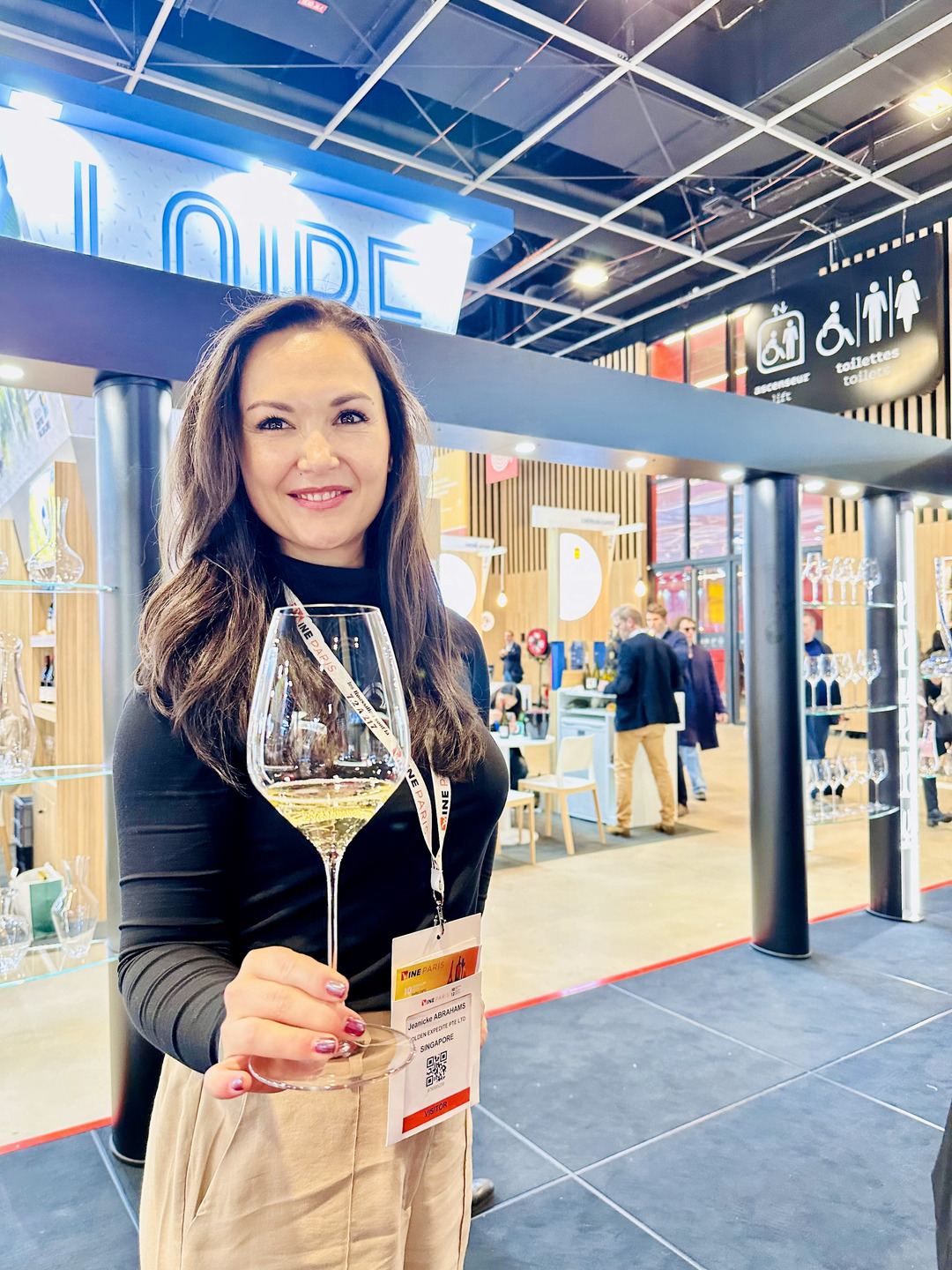
1. Wine Paris & Vinexpo Paris (France)
Timing: 9 – 11 February 2026
The Vibe: The rising star. Once a fragmented set of French regional shows, this consolidated event in Paris has grown aggressively over the last few years.
Why it Matters in 2026: It has successfully positioned itself as the first major fixture of the year. While deeply rooted in French regions, its “Vinexpo” arm draws significant international participation.
The 2026 Perspective: For a young business owner, the energy here is unmatched. It’s a masterclass in seeing the sheer scale of the “business of wine.” It’s efficient, modern, and strategically crucial for gaining early momentum in the sales cycle.
2. ProWein (Düsseldorf, Germany)
Timing: Mid-March 2026
The Vibe: The business behemoth. ProWein is less about romance and more about transactions. It is vast, serious, and incredibly efficient. The aesthetic is functional; the goal is volume.
Why it Matters in 2026: It remains the undisputed heavyweight for sheer scale of international commerce. If you are a large producer needing to meet distributors from Japan, Canada, and Norway in a single afternoon, this is where you go. It is the benchmark for global pricing and availability.
3. Vinitaly (Verona, Italy)
Timing: April 2026
The Vibe: Controlled chaos, Italian style. Vinitaly is massive, loud, glamorous, and intensely crowded. It is a cultural phenomenon as much as a trade fair.
Why it Matters in 2026: While it has international halls, this is the essential pilgrimage for anyone buying or selling Italian wine. The networking here happens as much at elaborate stand parties and dinners in historic Verona as it does in the meeting booths.
The Trendsetters and Regional Hubs
Beyond the Big Three, 2026 sees continued relevance for specialised and regional events.
Millésime BIO (Montpellier, France – Jan 2026):
The definitive marketplace for organic and biodynamic wines. As sustainability moves from a niche to a baseline requirement for many major retailers, this show’s influence has exploded.
London Wine Fair (UK – May 2026):
Vital for accessing the UK market, which remains one of the world’s most important import hubs and trend incubators.
Vinexpo Asia (Hong Kong/Singapore):
The critical gateway for producers targeting the complex and lucrative Asian markets.
The Boutique Standard: Merano Wine Festival (Italy)
While the “Big Three” focus on volume, the Merano Wine Festival (November 2026) operates on a completely different frequency.
The Vibe: “The Wine Hunter” (Helmuth Köcher) curation. This isn’t a hall of 5,000 producers; it is an elite selection where only the highest-scoring wines are invited. It’s hosted in the stunning Kurhaus, trading the “trade hall noise” for Belle Époque elegance.
Is it Worth It?
The Case FOR: If your brand (like Capelands) is built on exclusivity and story, Merano is where you meet the world’s most discerning palates. It’s about quality over quantity.
The Case AGAINST: If you are a volume-based producer looking for “mass distribution,” the high barrier to entry and curated nature of Merano might not yield the “transactional” ROI of a ProWein.
The Perspective: Are Trade Shows Still “Worth It” in 2026?
Attending these shows is expensive. For a winery, the cost of a stand, shipping samples, travel, and hotels can easily run into tens of thousands of Dollars/Euros. For buyers, the cost in time and travel is immense.
In an era of digital interconnectivity and lingering post-pandemic budget tightening, is the ROI still there?
The verdict is yes, but with major caveats. The era of just “showing up” is over.
The Case AGAINST Going (The Risks)
The Noise Problem: At ProWein or Vinitaly, you are one of 5,000+ producers. If you are a small, unknown winery without pre-booked appointments, you are essentially a needle in a haystack of needles. You can spend three days standing and pouring wine for people who will never buy from you.
The Cost vs. Digital Alternative: It costs almost nothing to send digital spec sheets and host a virtual tasting with a potential importer. For initial introductions, digital is far more cost-effective.
Sustainability Concerns: Flying thousands of people and shipping tons of heavy glass bottles around the world for a three-day event is increasingly scrutinised by an industry trying to lower its carbon footprint.
The Case FOR Going (The Reality)
Despite the downsides, trade shows remain indispensable for specific business goals in 2026:
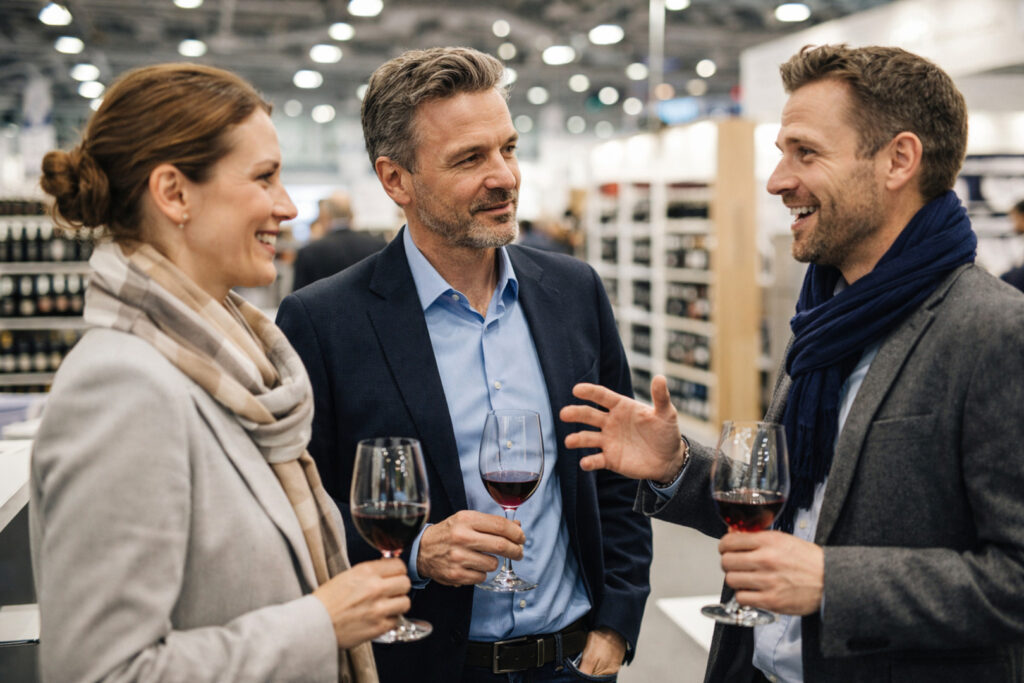
Efficiency of Scale for Buyers: If you are a supermarket buyer for a major chain, you need to taste 500 wines and meet 40 suppliers to plan your year. You can do that in three days in Düsseldorf. Trying to replicate that via email and individual winery visits would take six months.
The “Soft Power” of Trust: Wine distribution relies on trust. An importer is taking a risk on your product. Breaking bread, seeing the passion of the winemaker firsthand, and reading body language in a negotiation build the trust necessary to sign contracts.
Discovery and Serendipity: Algorithms only show you what you are looking for. Walking a trade floor exposes buyers to the unexpected, a new region in Eastern Europe, a breakthrough zero-alcohol technology, or a packaging innovation that they wouldn’t find online.
The 2026 Strategy
The consensus among successful professionals in 2026 is that trade shows are no longer for discovery; they are for confirmation.
The most successful attendees do 80% of their work before the doors open. They use digital tools to connect, send samples in advance, and fill their calendars with firm appointments. The trade show floor is merely the physical arena where the pre-arranged deal is finalised, the hand is shaken, and the relationship is cemented.
Bringing the Global Standard Home: The VineVibe Difference
While the massive halls of Düsseldorf and Verona set the global stage, you don’t always need a plane ticket to experience world-class wine curation.
At VineVibe, we bridge the gap between the international stage and the Western Cape. We understand the value of these global connections, having proudly represented our producers, such as Capelands, at prestigious international events like the Merano Wine Festival in Italy. We know what it takes to stand shoulder-to-shoulder with the world’s best.
However, we also believe that wine is best experienced intimately, not just transactionally.
Curated Experiences: Instead of the noise of a trade hall, we offer bespoke, guided tastings and private events where the focus is entirely on the liquid in the glass.
The Right Tools: As official partners with Riedel, we ensure that every drop is tasted exactly as the winemaker intended, a level of detail often lost in the chaos of an expo.
Whether you are looking to explore the nuances of local specialist producers or need a partner to elevate your next private function with the sophistication of a European trade event, VineVibe is your local connection to a world of exceptional wine.

 Events & Functions, General News